
Once More, with Feeling
Helen Keller and the Hidden Potential of the Human Mind

A peculiar conspiracy theory has flourished on social media over the past few years, about Helen Keller. Depending on the version, she never wrote her books, Anne Sullivan manufactured her public persona, or Keller herself was an elaborate fiction. The reasoning behind these notions is remarkably consistent. A woman who was deaf and blind could not possibly have graduated from college, written eloquent books, lectured before audiences around the world, or debated politics and philosophy.
I’m glad Helen Keller isn’t aware that there are people who doubt she ever accomplished the things history records. She spent enough of her life explaining herself. I don’t need to defend her here. Her life is its own monument to her accomplishments.
She was born in Tuscumbia, Alabama, in 1880. At nineteen months of age, an acute illness (hypothesized to be meningitis or scarlet fever) left her profoundly deaf and blind. For several years, she lived without formal language before Anne Sullivan arrived at the Keller home in March 1887. The breakthrough at the familiar water pump followed soon afterward, when Keller grasped that the patterns Sullivan spelled into her hand symbolized the water flowing over her other hand.
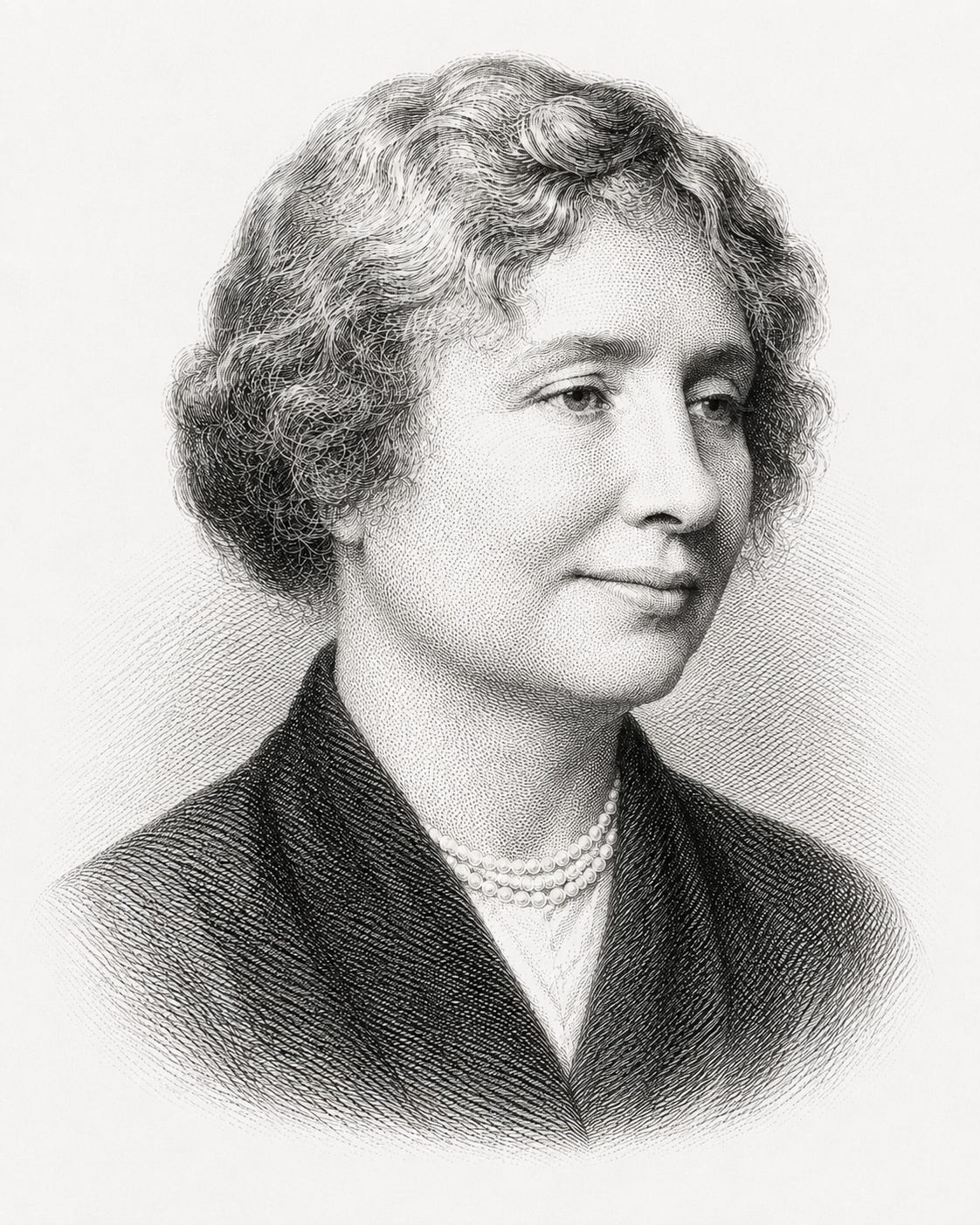
From there, her life became one of the most thoroughly documented educational journeys in history. She attended Perkins Institution for the Blind, the Wright-Humason School for the Deaf, the Cambridge School for Young Ladies, and eventually Radcliffe College, graduating cum laude in 1904. She published fourteen books and hundreds of essays.
While born into a white Southern family whose property and social position had been built partly through slavery, as an adult, she rejected the racial order she inherited and publicly supported the NAACP, opposed lynching and segregation, and condemned the continuing economic and political subordination of Black Americans. She was also an outspoken and persistent advocate for women’s suffrage and labor reform. She corresponded with presidents, scientists, writers, and political leaders.
She appeared in newsreels, documentaries, and countless photographs. Her communication through tactile fingerspelling survives on film for anyone to see. Keller lived in the age of photography, newspapers, and mass public appearances. Her life left an unassailable documentary trail. Yet disbelief persists, out there among the trolls, flat earthers, and Apollo moon landing deniers.
It’s natural to assume that another person’s mind is organized like our own until evidence forces us to reconsider. People with vivid visual imagery often struggle to imagine people who can’t form mental images (aphantasia). Conversely, people with aphantasia may doubt that others truly “see” images in their minds. Helen Keller conspiracists possess a similar cognitive bias on a larger scale. People imagine their adult selves suddenly deprived of sight and hearing, then try to picture the silence and darkness that would follow. They can’t imagine living as Helen Keller lived, so they conclude that Helen Keller could not have lived that way, either.
We tend to simulate her experience through our own adult frame of reference, instead of asking how her brain might have developed differently. An adult who abruptly loses vision and hearing carries decades of neural organization built around those senses. The brain’s wiring is so established that it’s nearly impossible to imagine what it would be without them at all. Helen Keller lost them before her second birthday, while her cerebral cortex was still assembling itself. The architecture of her mind developed under entirely different constraints than for those who are sighted and able to hear. That’s a key distinction.
The historical evidence of her life is substantial. She generated school records, college examinations, letters, manuscripts, interviews, films, newspaper accounts, and thousands of independent observations extending over more than eighty years. People who had never met Anne Sullivan marveled at Keller’s intellectual range. Her political writings often frustrated some who preferred a more curated public image, which hardly resembles the output of a carefully managed puppet.
Keller’s abilities were repeatedly tested under conditions in which her teacher, Anne Sullivan, could transmit neither the questions nor the answers freely. At Radcliffe, independent proctors presented the material, and Keller typed her own responses. She also communicated through multiple partners and continued her intellectual work for more than thirty years after Sullivan’s death.
The language of her books has also attracted skeptics. How could a deafblind woman write about sunsets, music, birds, or color? Doesn’t one need to “see” those things?
Keller’s use of language reveals something more interesting than her occasional use of visual verbs. Throughout The World I Live In, she repeatedly returns to the theme of touch. Her remaining modalities become recurring themes as she explains how the external world entered her mind through touch, vibration, and smell. Objects emerge through successive exploration rather than a single glance. Places acquire their identity through accumulated tactile and spatial experience. Even abstract ideas are often grounded in physical contact with the world. The frequency with which she returns to these tactile descriptions reflects her conscious awareness of the sensory pathways through which her understanding had been constructed.
“Every object is associated in my mind with tactual qualities which, combined in countless ways, give me a sense of power, of beauty, or of incongruity.” – Helen Keller, The World I Live In.
Familiar scents identified places and people. Rather than limiting her understanding, these sensory pathways provided sufficient information for the developing brain to construct stable representations of objects, space, language, and eventually abstract ideas. Modern readers who dismiss Keller’s achievements often underestimate how much information is available through these channels, particularly when they become the principal sources of experience during early brain development.
How could a brain, deprived of both vision and hearing, construct such a rich internal world? When Keller described exploring a horse, she explained that her hands encountered only separate parts: the muzzle, the mane, the shoulder, the flank. Her fingers never touched the entire animal at once. Yet the completed horse existed in her mind as a unified whole. “My fingers feel the parts,” she wrote, “and my mind puts them together.”
Research over the past several decades has transformed our understanding of sensory cortices we use to assemble the world. During the 1990s, brain imaging studies showed that congenitally blind people reading Braille activated primary visual cortex. At first, many investigators wondered whether the activation was merely incidental. In a clever experiment, researchers applied transcranial magnetic stimulation (TMS is a powerful electromagnet that, when applied to the head, can locally disrupt brain activity) over occipital cortex while blind participants read Braille. The stimulation disrupted their ability to read. It seems the “visual” cortex had become functionally necessary for tactile language.
In some expert Braille readers, stimulating occipital cortex produced tactile sensations in the fingers rather than flashes of light. Deprived occipital cortex had in effect joined a different functional network.
Parallel discoveries emerged from studies of deaf individuals. Regions normally associated with auditory processing became engaged during visual motion, sign language, and other tasks. Across both literatures, the emerging picture grew steadily clearer. The cortex is shaped by developmental constraints, while its mature role also depends upon the information it receives and the computations it performs.
Animal experiments by Mriganka Sur’s laboratory uncovered some of the potential mechanisms underlying this reorganization. Sur and his colleagues rerouted retinal projections into the auditory thalamus of newborn ferrets. Visual information therefore arrived in auditory cortex. As the animals matured, those cortical regions developed visual receptive fields, maps of visual space, orientation selectivity, and the ability to guide visually-based behavior. The rewired cortex retained traces of its original architecture, but also acquired properties normally associated with vision.
While they were not shown to possess normal object vision through the rewired pathway, Sur’s rewired ferrets demonstrated behaviorally useful visual perception through auditory cortex, including light detection, visual–auditory categorization, and spatial-frequency discrimination. The experiment revealed that early cortical identity emerges through a dialogue between inherited structure and patterned experience.
Helen Keller’s own descriptions were a harbinger of this neuroscience in an unexpected way. She portrayed her inner world as coherent spatial forms assembled from successive exploration. Her fingers acquired local information: curvature, texture, resistance, temperature, movement. She integrated those fragments into complete representations that could later be recalled, manipulated, and imagined.
Keller’s descriptions have a modern technological analogue. When 3-D scanner apps on a mobile device scan a three-dimensional object, it doesn’t capture the entire form at once. As the camera moves, it collects thousands of local measurements and continuously updates an internal model until a complete object emerges. Keller’s description is similar, except instead of an image, her fingers explored one region after another while her brain preserved each tactile impression, related it to those that came before, and gradually knit together a coherent representation of the whole. “I feel the parts,” she wrote, “and my mind puts them together.” It’s only an analogy, but it captures an important idea that her perception constructed a model of the world from successive observations.
Words then supplied relationships extending beyond the reach of her hands: mountains she had never climbed, or stars she could never reach. Those descriptions entered a brain already grounded in touch, movement, smell, vibration, and embodied experience, allowing concepts to grow beyond immediate sensation. Was something like a mountain represented within her mind in the same way it is in your mind? It’s doubtful. But the representation was no less tangible to her.
Keller sometimes described this process in her own terms, tracing a different route toward the same understanding. Her accomplishments arose from a rare convergence of intelligence, sustained effort, inspired teaching, and opportunity. Her life also revealed something fundamental about the developing brain: its capacity to construct a coherent world from whatever channels of experience remain open.
Helen Keller skeptics ask us to believe that generations of teachers, classmates, editors, physicians, journalists, filmmakers, and readers collectively sustained an elaborate deception. And that luminaries like Alexander Graham Bell, Mark Twain, Albert Einstein, Andrew Carnegie, Eleanor Roosevelt, Henry Ford, and many other leading intellectual and public figures of her time were either all in on it, or duped. Instead, they knew her as a correspondent, conversationalist, writer, and friend.
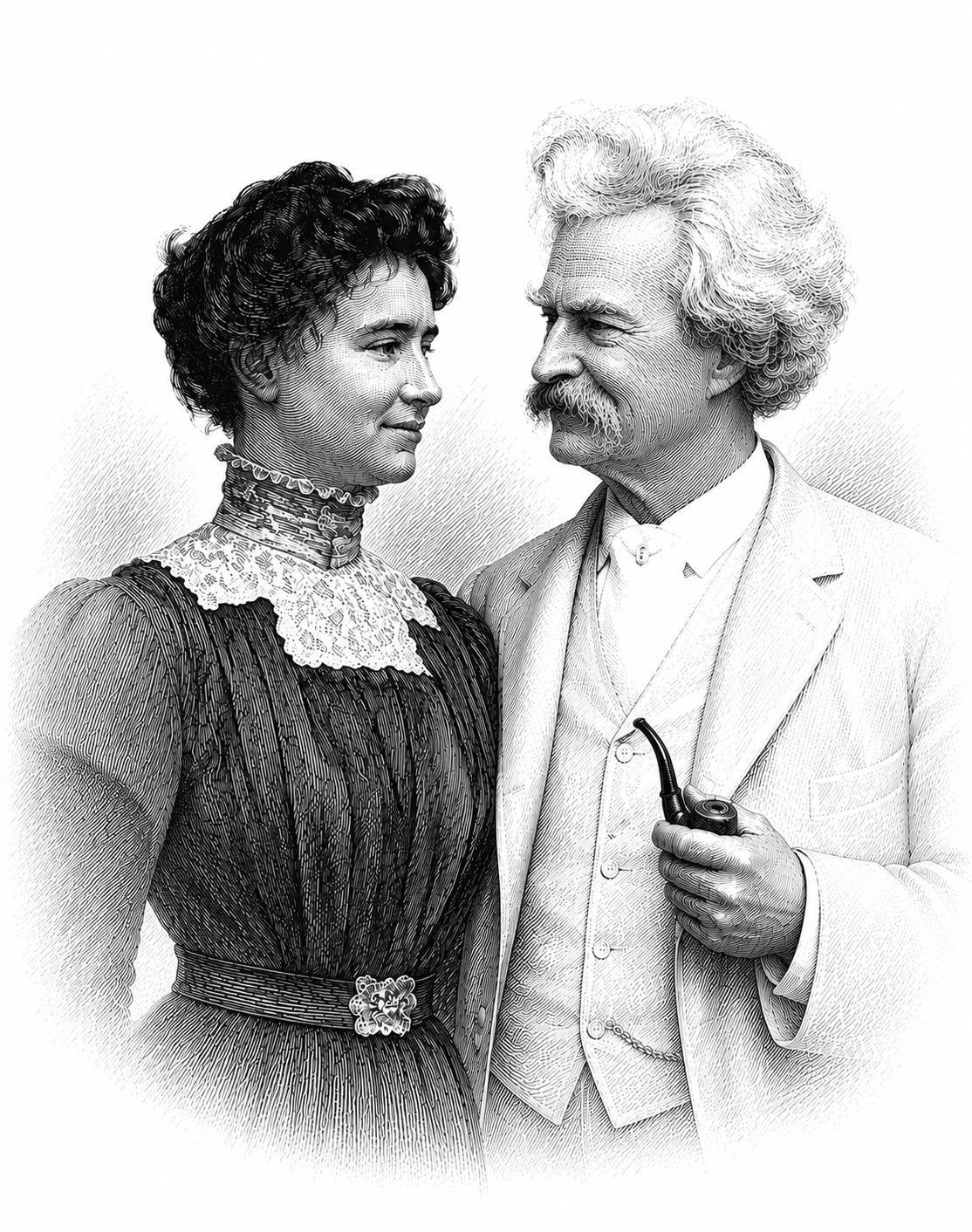
The truth of Helen Keller is more interesting, and I think, more human. A young brain, confronted with an altered sensory world, reorganized itself around the information still available. Cortical regions may have been recruited for new purposes: touch acquired the structure of language and opened a channel for conversation. The sequential exploration of objects was the way she assembled her world into spatial understanding. The symbolism of words then carried thought beyond the boundaries of her immediate experience.
An ancient parable from India tells of several blind men encountering an elephant. One feels the trunk and concludes it is a snake. Another grasps a leg and insists it is a tree. A third examines the tusk and imagines a spear, and the last detects, in feeling the ear, a fan. The story has long served as a warning about drawing sweeping conclusions from limited experience. Helen Keller’s life suggests a complementary lesson. The blind men of the parable stop exploring, but Helen Keller didn’t.
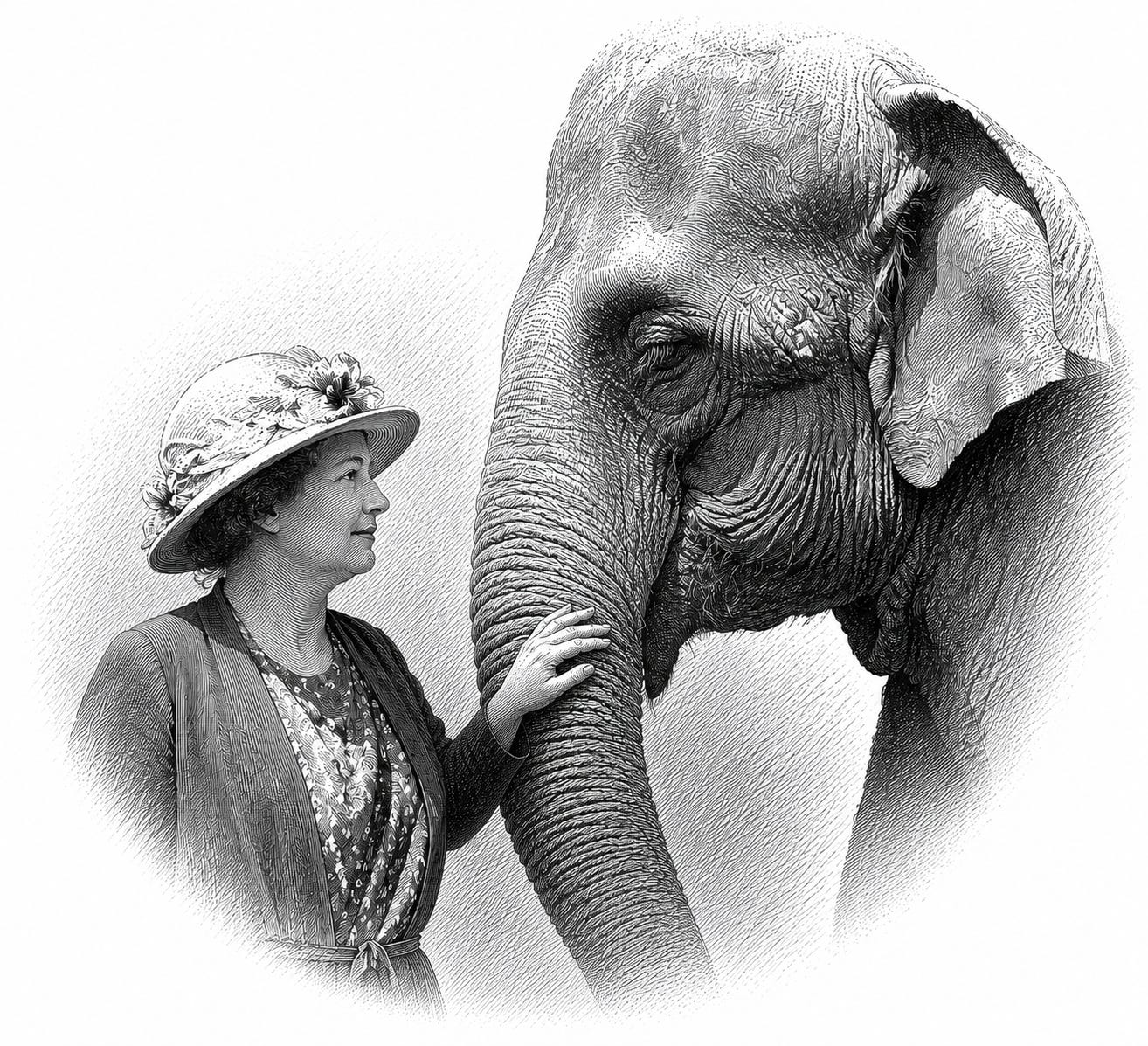
She once met an elephant herself. During a visit to the Bronx Zoo, an Indian elephant named Alice examined Keller with her trunk, gently touching her face, shoulder, and foot while Keller returned the exploration with her own hands. For her, the elephant never remained a trunk, an ear, or a leg. Each new observation refined the one before until a coherent whole emerged.
We’ve begun to explain how such integration is possible, and have even designed technologies that solve comparable problems. Keller understood this process through lived experience. Her life reminds us that perception requires seeking, remembering, and assembling. The world yields itself gradually to minds willing to keep exploring.
[Dwayne Godwin is a neuroscientist who researches PTSD, TBI, and alcohol use disorder. He is the co-author of “Out of Your Mind: The Biggest Mysteries of the Human Brain”. The views expressed here are his own and do not necessarily reflect those of the National Institutes of Health or his employer.]
For Further Exploration:
Amedi, A., Malach, R., Hendler, T., Peled, S., & Zohary, E. (2001). Visuo-haptic object-related activation in the ventral visual pathway. Nature Neuroscience, 4(3), 324–330. https://doi.org/10.1038/85201
Bavelier, D., & Neville, H. J. (2002). Cross-modal plasticity: Where and how? Nature Reviews Neuroscience, 3(6), 443–452. https://doi.org/10.1038/nrn848
Bedny, M., Pascual-Leone, A., Dravida, S., & Saxe, R. (2012). A sensitive period for language in the visual cortex: Distinct patterns of plasticity in congenitally versus late blind adults. Brain and Language, 122(3), 162–170. https://doi.org/10.1016/j.bandl.2011.10.005
Cohen, L. G., Celnik, P., Pascual-Leone, A., Corwell, B., Falz, L., Dambrosia, J., Honda, M., Sadato, N., Gerloff, C., Catalá, M. D., & Hallett, M. (1997). Functional relevance of cross-modal plasticity in blind humans. Nature, 389(6647), 180–183. https://doi.org/10.1038/38278
Keller, H. (1903). The story of my life. Doubleday, Page & Company.
Keller, H. (1908). The world I live in. The Century Company.
Keller, H. (1923, September). My animal friends. Zoological Society Bulletin, 26(5).
Kral, A. (2007). Unimodal and cross-modal plasticity in the “deaf” auditory cortex. International Journal of Audiology, 46(9), 479–493. https://doi.org/10.1080/14992020701383027
Kupers, R., Pappens, M., de Noordhout, A. M., Schoenen, J., Ptito, M., & Fumal, A. (2007). rTMS of the occipital cortex abolishes Braille reading and repetition priming in blind subjects. Neurology, 68(9), 691–693. https://doi.org/10.1212/01.wnl.0000255948.60515.11
Lewis, L. B., Saenz, M., & Fine, I. (2010). Mechanisms of cross-modal plasticity in early-blind subjects. Journal of Neurophysiology, 104(6), 2995–3008. https://doi.org/10.1152/jn.00983.2009
Lomber, S. G., Meredith, M. A., & Kral, A. (2010). Cross-modal plasticity in specific auditory cortices underlies visual compensations in the deaf. Nature Neuroscience, 13(11), 1421–1427. https://doi.org/10.1038/nn.2653
Merabet, L. B., & Pascual-Leone, A. (2010). Neural reorganization following sensory loss: The opportunity of change. Nature Reviews Neuroscience, 11(1), 44–52. https://doi.org/10.1038/nrn2758
Pallas, S. L., & Sur, M. (1993). Visual projections induced into the auditory pathway of ferrets. II. Corticocortical connections of primary auditory cortex. Journal of Comparative Neurology, 337(2), 317–333. https://doi.org/10.1002/cne.903370212
Pallas, S. L., Roe, A. W., & Sur, M. (1990). Visual projections induced into the auditory pathway of ferrets. I. Novel inputs to primary auditory cortex (AI) from the LP/pulvinar complex and the topography of the MGN–AI projection. Journal of Comparative Neurology, 298(1), 50–68. https://doi.org/10.1002/cne.902980105
Pascual-Leone, A., Amedi, A., Fregni, F., & Merabet, L. B. (2005). The plastic human brain cortex. Annual Review of Neuroscience, 28, 377–401. https://doi.org/10.1146/annurev.neuro.27.070203.144216
Pietrini, P., Furey, M. L., Ricciardi, E., Gobbini, M. I., Wu, W.-H. C., Cohen, L., Guazzelli, M., & Haxby, J. V. (2004). Beyond sensory images: Object-based representation in the human ventral pathway. Proceedings of the National Academy of Sciences of the United States of America, 101(15), 5658–5663. https://doi.org/10.1073/pnas.0400707101
Ptito, M., Fumal, A., Martens de Noordhout, A., Schoenen, J., Gjedde, A., & Kupers, R. (2008). TMS of the occipital cortex induces tactile sensations in the fingers of blind Braille readers. Experimental Brain Research, 184(2), 193–200. https://doi.org/10.1007/s00221-007-1091-0
Roe, A. W., Pallas, S. L., Kwon, Y. H., & Sur, M. (1992). Visual projections routed to the auditory pathway in ferrets: Receptive fields of visual neurons in primary auditory cortex. Journal of Neuroscience, 12(9), 3651–3664. https://doi.org/10.1523/JNEUROSCI.12-09-03651.1992
Sadato, N., Pascual-Leone, A., Grafman, J., Ibañez, V., Deiber, M.-P., Dold, G., & Hallett, M. (1996). Activation of the primary visual cortex by Braille reading in blind subjects. Nature, 380(6574), 526–528. https://doi.org/10.1038/380526a0
Sadato, N., Pascual-Leone, A., Grafman, J., Deiber, M.-P., Ibañez, V., & Hallett, M. (1998). Neural networks for Braille reading by the blind. Brain, 121(7), 1213–1229. https://doi.org/10.1093/brain/121.7.1213
Sharma, J., Angelucci, A., & Sur, M. (2000). Induction of visual orientation modules in auditory cortex. Nature, 404(6780), 841–847. https://doi.org/10.1038/35009043
Sur, M., Garraghty, P. E., & Roe, A. W. (1988). Experimentally induced visual projections into auditory thalamus and cortex. Science, 242(4884), 1437–1441. https://doi.org/10.1126/science.2462279
Sur, M., & Rubenstein, J. L. R. (2005). Patterning and plasticity of the cerebral cortex. Science, 310(5749), 805–810. https://doi.org/10.1126/science.1112070
von Melchner, L., Pallas, S. L., & Sur, M. (2000). Visual behaviour mediated by retinal projections directed to the auditory pathway. Nature, 404(6780), 871–876. https://doi.org/10.1038/35009102
© 2026 Dwayne W. Godwin.